

Clinical data
PATHFNDR-1: switching from SRL injections
PALSONIFY was studied in two phase 3, randomized, placebo-controlled clinical trials1

A 36-week study that evaluated adults with acromegaly who were biochemically controlled and switching from octreotide or lanreotide depot injections.1
Rapid and reliable biochemical control
Seamlessly maintained IGF-1 control in patients who switched from SRL injections1,2*
Percentage of patients maintaining normal IGF-1 at week 361,2
Primary endpoint
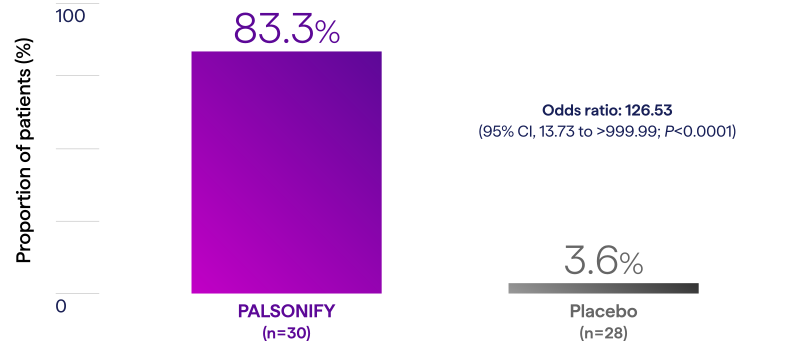
PALSONIFY maintained
Normal IGF-1 defined as ≤1.0 × ULN1
- *Octreotide or lanreotide.1
- IGF-1=insulin-like growth factor 1; SRL=somatostatin receptor ligand; ULN=upper limit of normal.
mean IGF-1 by visit2,11*
Exploratory endpoint
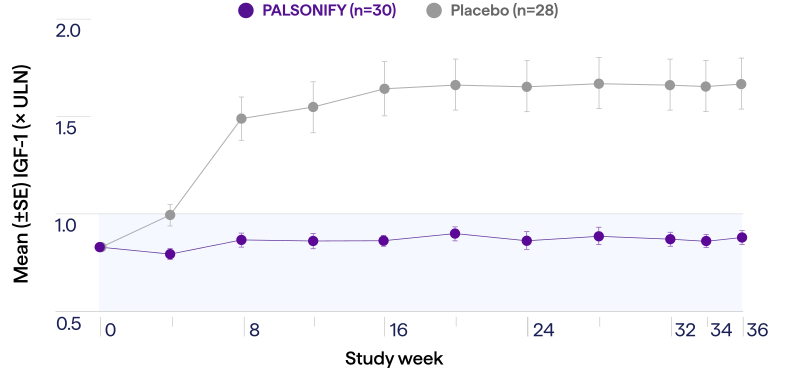
Only 1 patient taking PALSONIFY had an
- *Last observation carried forward for patients who received rescue medication or discontinued from the study.11
- EOT=end of treatment (
week 36 or last assessment before rescue).2,11
PALSONIFY maintained GH control2*
87%
of patients taking PALSONIFY maintained target
- *Secondary endpoint.
- GH=growth hormone.
Consistent symptom control maintained with PALSONIFY7
Symptom control assessed using the Acromegaly Symptom Diary (ASD), a novel PRO tool12
Mean change in ASD score by symptom from baseline to
Exploratory endpoint
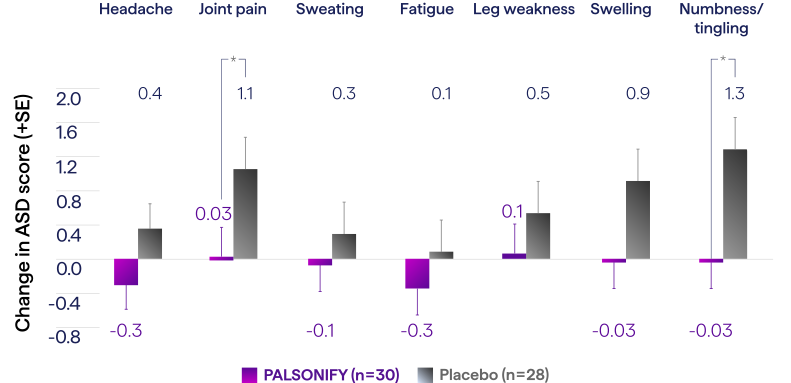
PALSONIFY reduced symptom severity vs placebo7†
- *Nominal P<0.05; should not be interpreted as establishing clinical significance.7
- †Secondary endpoint. The change from baseline to
week 36 in total ASD score showed a statistically significant improvement of -0.6 for patients who took PALSONIFY compared to a worsening of 4.6 for patients on placebo (P=0.0216).7 - PRO=patient-reported outcome.
Post hoc analysis showed reduced symptom variability after switching from iSRLs to PALSONIFY11*
CHANGE IN OVERALL SYMPTOM EXACERBATION FREQUENCY FROM iSRL BASELINE IN PATIENTS WHO SWITCHED TO PALSONIFY (n=22)11
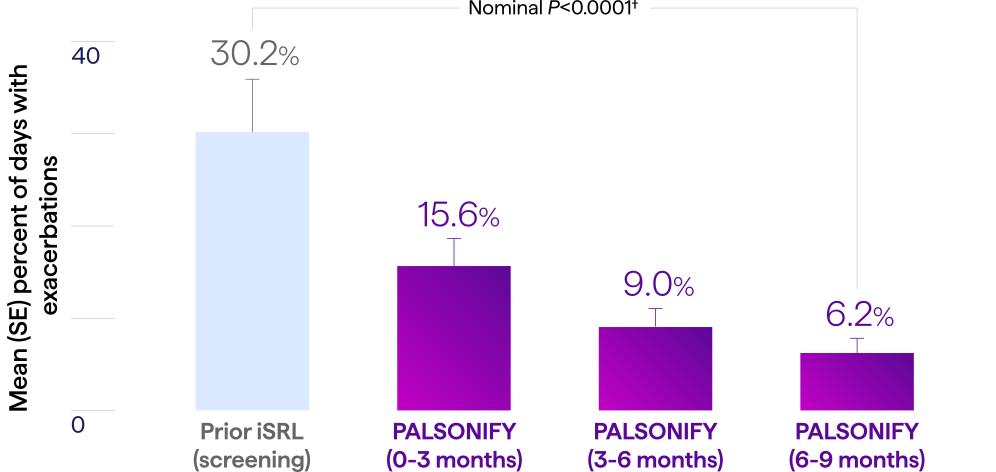
PALSONIFY demonstrated improved symptom stability in biochemically controlled patients11
- *Methods: Post hoc symptom analyses included
PATHFNDR-1 participants who had adequate ASD data (at least 4 completed days during the screening period) and did not require rescue with iSRLs. Symptom exacerbation was defined as a≥2-point increase for any individual symptom score, comparing a2-day average to the previous2-day average.11 - †Exploratory post hoc analysis; should not be interpreted as establishing clinical significance.11
- iSRLs=injected somatostatin receptor ligands.
Change from iSRL baseline in individual symptom exacerbation frequencies in patients treated with PALSONIFY11
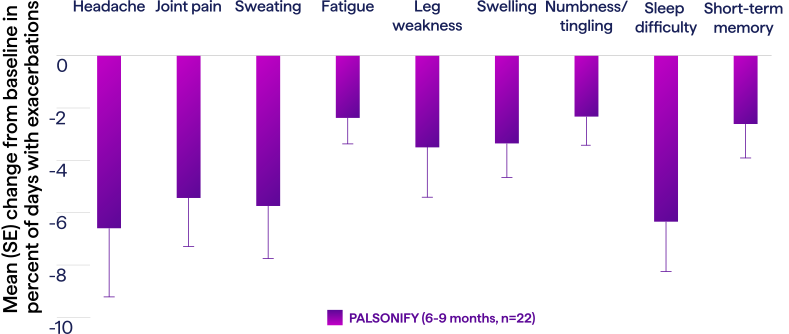
Patients reported greater consistency across symptoms11
The majority of patients stayed on PALSONIFY and maintained IGF-1 control in an extension study10,13

High retention through trial2
98%
of patients completed the

Strong preference to stay on therapy2
93%
of eligible patients who completed the randomized control period opted to continue on or switch to PALSONIFY in the open-label extension study instead of returning to injections*

Control maintained long term1,10
96%
of patients who maintained normal
- *The starting dose of PALSONIFY in the extension study was
40 mg/day . The dose could be titrated up to60 mg/day based onIGF-1 or titrated down to20 mg/day based on tolerability.8 - †Among patients who achieved
IGF-1 normalization at week 36 of the randomized control period and completed theweek 60 visit of the extension study,22/23 (96%) maintainedIGF-1 normalization atweek 60 of the extension study.10
Rigorously studied in patients who were biochemically controlled on SRL injections1,2
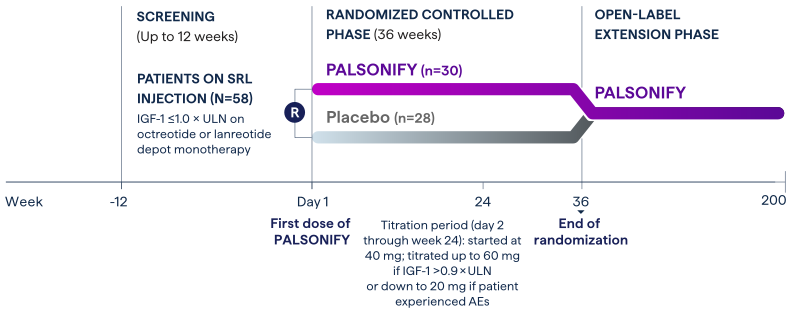

Primary endpoint: proportion of patients with

Results: primary and all secondary endpoints were met1,2*
- *Secondary endpoints included change from baseline in
IGF-1 (measured as × ULN) at end of randomized treatment or the last assessment before rescue medication; change from baseline in total ASD score at end of randomized treatment; and proportion of patients with mean5-sample GH <1.0 ng/mL atweek 34 among those with mean5-sample GH <1.0 ng/mL during screening.2 - AEs=adverse events.
Well-tolerated safety profile1
The safety of PALSONIFY was evaluated in
| Adverse reaction* | PALSONIFY (n=30) n (%) |
Placebo (n=28) n (%) |
|---|---|---|
| Diarrhea | 7 (23) | 3 (11) |
| Nausea | 4 (13) | 1 (4) |
| Decreased appetite† | 3 (10) | 0 |
| Palpitations | 2 (7) | 0 |
| Gastroenteritis | 2 (7) | 0 |
- *Adverse reactions occurring in
≥5% ofPALSONIFY-treated participants and5% greater incidence than placebo-treated participants during the randomized control period. - †Decreased appetite also includes early satiety.
Key safety outcomes from the randomized control period of the PATHFNDR-1 clinical study

Mild to moderate AEs2
The most commonly reported AEs (arthralgia, headache, diarrhea, and abdominal pain) were mild to moderate in intensity.

GI AEs resolved2
GI AEs were resolved without discontinuing PALSONIFY, consistent with the typical course of
SRL-related GI AEs .
Low discontinuation rate2
Only 1 patient who discontinued PALSONIFY to receive rescue therapy met the full rescue criteria.*
No tumor changes2
Patients did not develop any new visible tumors, and there were no tumor volume increases or decreases deemed clinically significant.†
- *Rescue medication (patient’s prior iSRL) was administered if a patient had 2 consecutive IGF-1 levels ≥1.3 × ULN at the highest dose of study medication (60 mg/day) and exacerbation of acromegaly clinical signs and symptoms. Only 1 patient in the study met the full rescue criteria. Another patient in the study received rescue therapy due to AEs that were not considered to be related to PALSONIFY.2
- †Clinically significant changes in pituitary tumor volume were defined as increases or decreases of >25% from baseline to
week 36 as measured by MRI.2 - GI=gastrointestinal; MRI=magnetic resonance imaging.
A new tool was developed to monitor acromegaly symptoms in clinical trials12
The Acromegaly Symptom Diary (ASD) is a novel patient-reported outcome (PRO) tool. Built in accordance with FDA guidance, the ASD offers quantifiable insight into changes in acromegaly symptoms. It was designed to assess symptom severity and capture the day-to-day symptom burden that traditional biochemical markers may overlook.
The ASD in PATHFNDR studies
The ASD was used in PALSONIFY clinical trials to evaluate symptom control over time. It was completed daily during screening and during study treatment. Patients rated each symptom on a scale from 0 (no symptom) to 10 (worst symptom).
The total ASD score is the weekly average of daily scores (the sum of a scored item over 1 week divided by the number of days on which the item was completed).
The ASD tool measured symptom severity in 7 categories:
- Headache
- Joint pain
- Sweating
- Fatigue
- Leg weakness
- Swelling
- Numbness or tingling